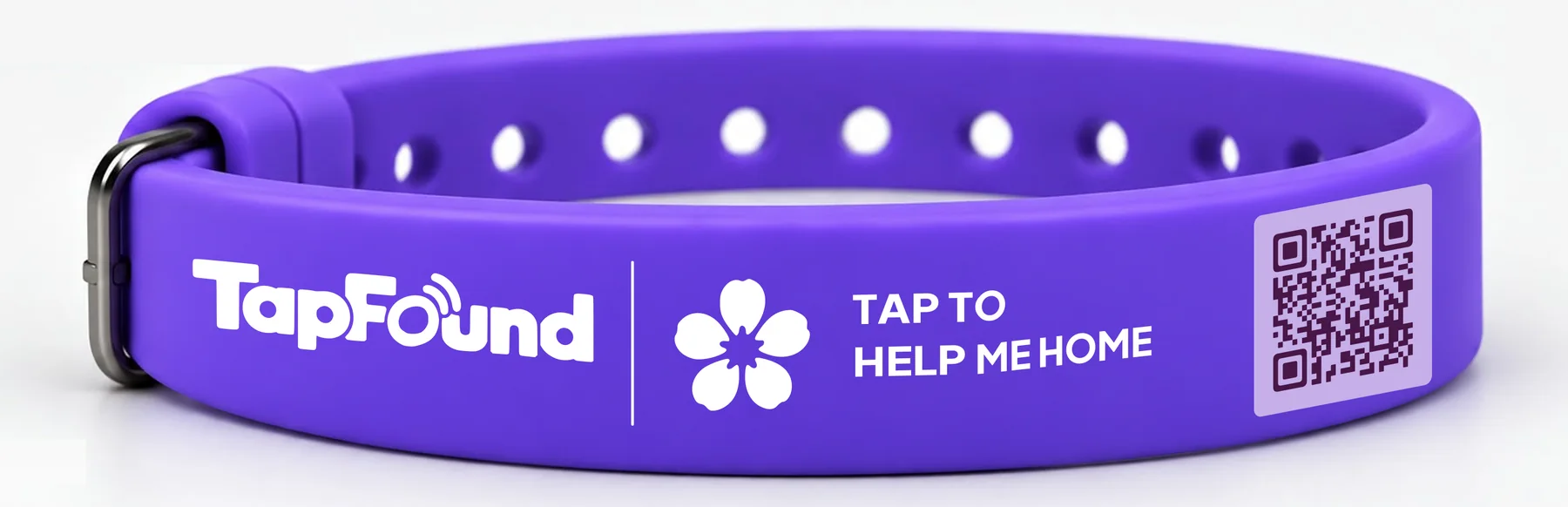
A dementia wristband that helps them get home

Lost? Tap. Found.

If someone you care for has dementia or Alzheimer's and becomes confused or lost, the person who finds them usually wants to help but doesn't know who to call. The violet band reads TAP TO HELP ME HOME. One tap with a phone puts them in touch with you.

Lavender-violet TapFound wristband reading TAP TO HELP ME HOME

Lavender-violet band

What the person who finds them sees

TapFound emergency page

Hi, I'm Margaret

Please help me get home

Call Jane (Daughter)

What helps me

Speak calmly. Tell me Jane is on her way.

Please don't

Argue with me or leave me on my own.

Call emergency services (999)

Example page. Every detail is hidden until you choose to show it.

Built to reconnect, not to diagnose

The page puts calling family first, then shows the finder how to keep your relative calm, in your own words. Medical details appear only if you switch them on, further down the page.

You don't have to mention dementia at all. Many families simply write what helps: "Speak slowly. Tell her Jane is on her way."

You'll know as soon as they're found

The moment the band is tapped, you're alerted with the approximate area. The finder can share their exact location with one tap and message you from the page.

It isn't a tracker

The band has no GPS and no battery, so it can't tell you where someone is until a person taps it. If you need to know where someone is at all times, you'll need a GPS device as well.

It works alongside the Herbert Protocol. Keep your local police form up to date too.

Think carefully about the address

Showing a home address can help someone walk your relative home, but anyone who taps the band will see it. Many families show only the area, or leave it off and let the call do the work.

What you can include

Every detail is hidden until you switch it on, and you can change it at any time without a new band.

Designed to be found.

Set up a dementia profile

In an emergency, always call 999 first.

Also in Health & Medical